
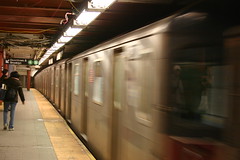
 And a train was actually hit! Fortunately it was stationary on the tracks, but it crushed the side panel of the driver’s carriage. Neither the driver nor any passengers were injured in the incident. The drill rig was drilling to install ground source heating or geothermal heating for a hotel when at a depth of 20 to 25 meters (65 to 82-ft), the drillers noticed that they lost resistance when they punched through the subway tunnel. Upon withdrawing the drill stem, they were missing the bottom 2.5-m according to a local police official. Story at The Local. (Photo of N.Y. Subway from runnx)

News
Ft. Collins Hiking/Biking Tunnel Beneath BNSF Railroad
The City of Fort Collins (Colorado) recently completed construction of a tunnel underneath BNSF Railway tracks to connect more than 30 miles of trails. The prospect of tunneling under an active rail line is a […]

Press Releases
Black & Veatch to design Chicago’s McCook Reservoir tunnel connection for USACE
Kansas City, Mo. (Aug. 5, 2009) – The U.S. Army Corps of Engineers (USACE) has selected Black & Veatch as the design engineer for the McCook Reservoir Main Tunnel. The new tunnel will connect the future McCook Reservoir to Chicago’s Deep Tunnel system, which is aimed at improving water quality in area rivers and Lake Michigan and reducing flood risk for the city of Chicago and suburban communities. [Editor] Read on for the rest of the press release. Photo copyright Black and Veatch[/Editor] […]

Failures
Tunnel Repair Begins on CO I-70
ENR reports that repair work has begun on a portion of the Hanging Lake Tunnel on I-70 in Glenwood Colorado after a crack opened up in the tunnel bore ceiling slab. Read on for more info. (CDOT Photo)
Comments are closed.
It can only happen if the co. is highly unprofessional.
thnks
nk agarwal
Tunnelling Engineering 🙂